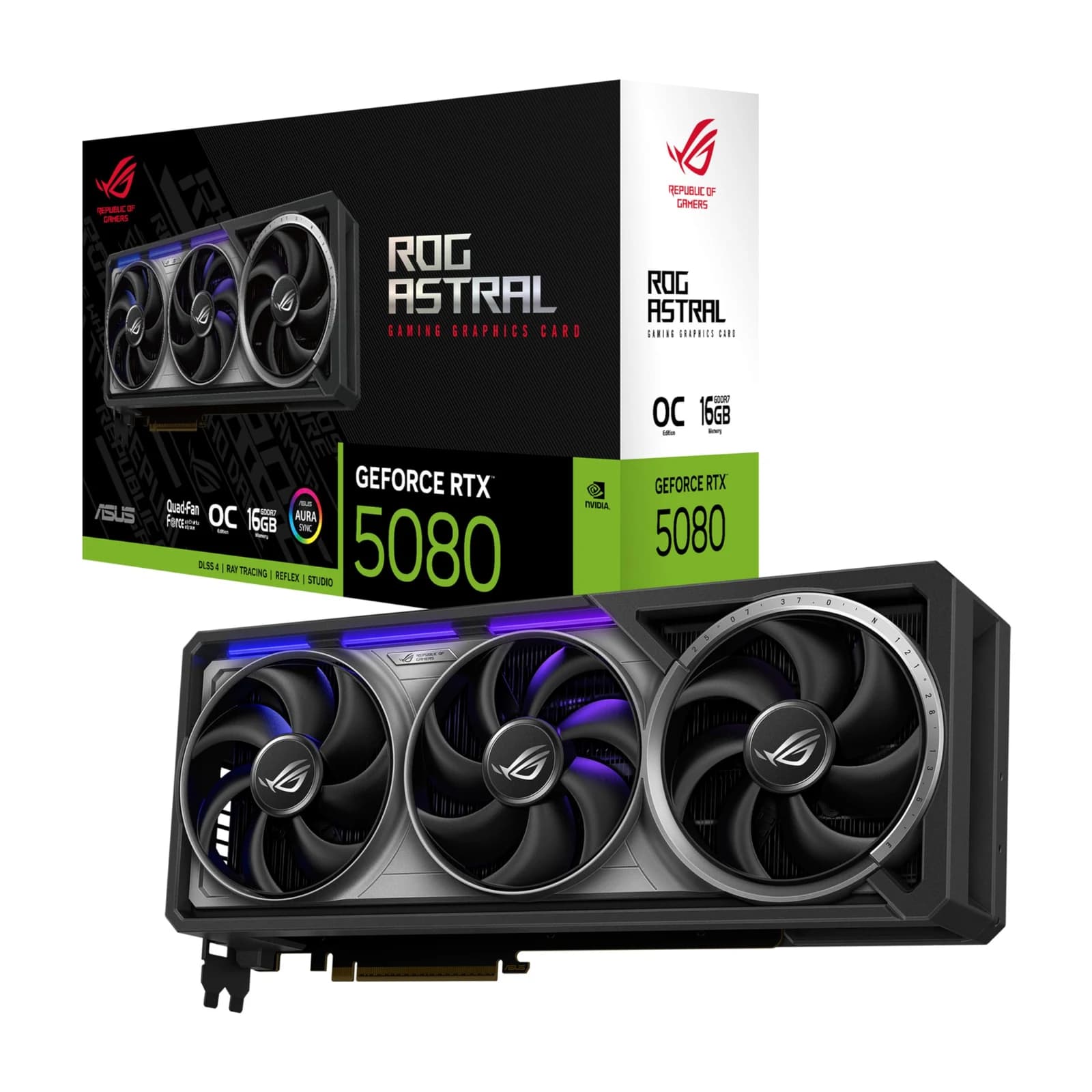
NVIDIA GeForce RTX 5080
GeForce RTX 50 Series
- Memory
- 16 GB GDDR7
- TGP
- 360 W
Core, memory and power specifications shown side by side
GeForce RTX 50 Series
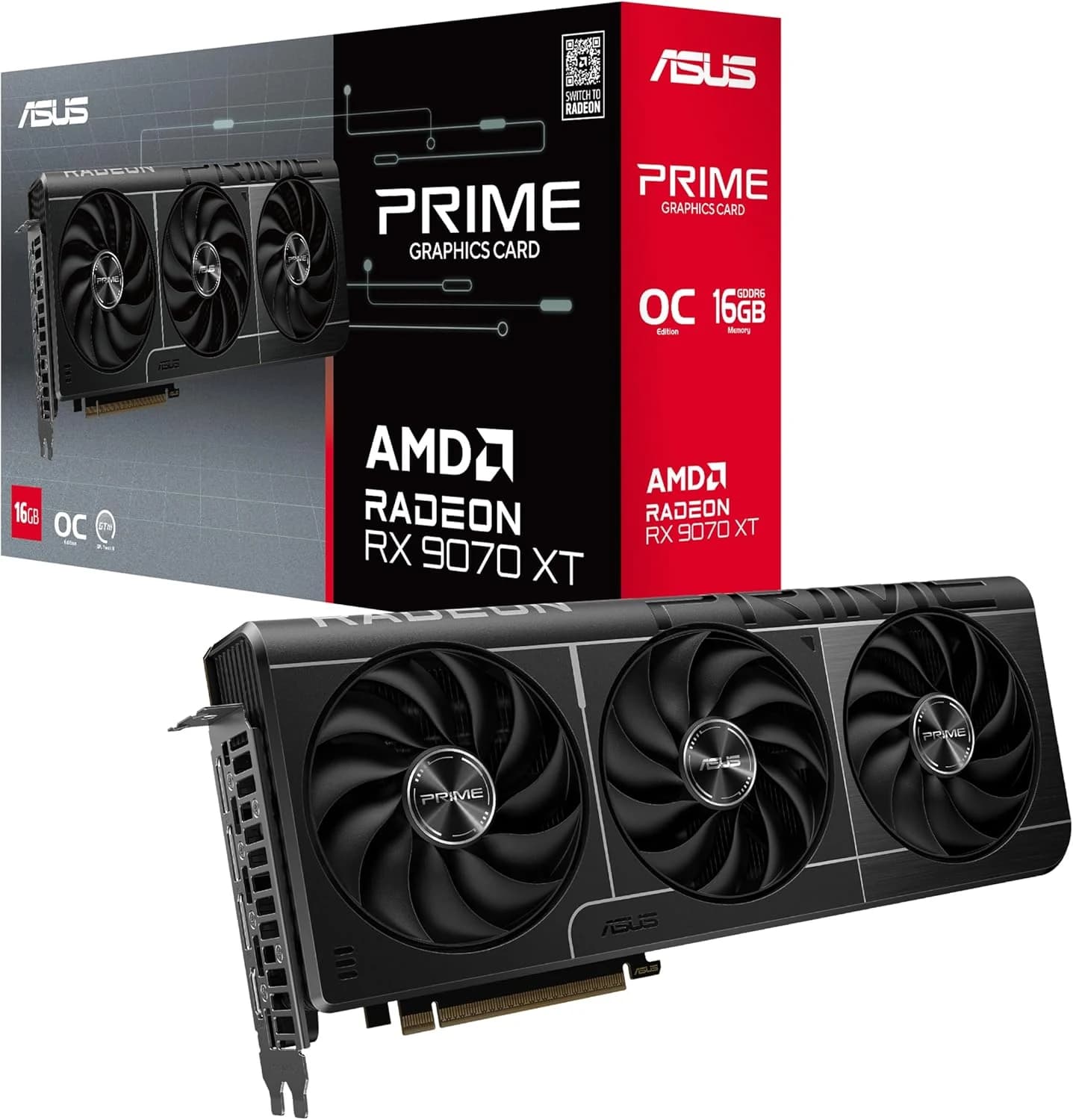
Radeon RX
RTX 5080 and RX 9070 XT compared through published hardware specifications.
RTX 5080 vs RX 9070 XT published GPU specifications. Memory: 16 GB GDDR7 vs 16 GB GDDR6. Boost clocks: 2,620 MHz vs 2,970 MHz. Power: 360 W TGP vs 304 W TBP.
Published specifications do not measure gaming performance. Compute counts and clock speeds are architecture-specific and should not be treated as direct performance equivalents. TGP, TBP and Board power are vendor-defined power terms and remain labelled as published.
Measured evidence
Historical launch-price evidence and Blender Cycles measurements are shown in their original scope.
Historical USD launch prices are source-scoped. They are not current offers or inflation-adjusted values.
9,103.9 estimated samples per minute
3,281.8 estimated samples per minute
For cross-vendor comparisons, backend implementation can affect the result.
These community medians describe one fixed Blender Cycles rendering cohort. They do not establish overall GPU performance.
NVIDIA GeForce RTX 5080
Confirm the selected model, seller, condition, delivery region and checkout total on the retailer's site. A listing is not a compatibility recommendation.
GIGABYTE RTX 5080 Gaming OC 16GB
Part number: GV-N5080GAMING OC-16GD
Linked variant: 16 GB GDDR7
Partner-board listing. Clocks, cooling, dimensions, connectors and power limits can differ from the reference specifications on this page.
Affiliate link. As an Amazon Associate I earn from qualifying purchases.
View on AmazonAMD Radeon RX 9070 XT
Confirm the selected model, seller, condition, delivery region and checkout total on the retailer's site. A listing is not a compatibility recommendation.
ASUS Prime RX 9070 XT OC 16GB
Part number: PRIME-RX9070XT-O16G
Linked variant: 16 GB GDDR6
Partner-board listing. Clocks, cooling, dimensions, connectors and power limits can differ from the reference specifications on this page.
Affiliate link. As an Amazon Associate I earn from qualifying purchases.
View on AmazonEvidence record
Specifications for NVIDIA GeForce RTX 5080 were checked against the linked source material. Last verified .
The RTX 5080 image context comes from a reviewed owner-supplied local ASUS manufacturer image and is not asserted by the NVIDIA specification sources.
NVIDIA - Manufacturer
Supports: Architecture, Compute, Clocks, Memory, Power and Physical design
Retrieved
NVIDIA - Manufacturer
Supports: Memory
Retrieved
NVIDIA - Manufacturer
Supports: Launch date
Retrieved
Evidence record
Specifications for AMD Radeon RX 9070 XT were checked against the linked source material. Last verified .
The RX 9070 XT image is the existing owner-supplied ASUS partner image and is not asserted by AMD sources. The launch_date stores March 6 2025 commercial availability while AMD used launch language on February 28. The exact 2400 MHz game clock and 2970 MHz boost from the product page are used instead of the newsroom's rounded GHz values. AMD publishes no fixed dimensions or display output counts and retail partner designs can vary.
AMD - Manufacturer
Supports: Compute, Clocks, Memory, Power and Physical design
Retrieved
AMD Newsroom - Manufacturer
Supports: Launch date, Architecture, Compute, Clocks, Memory and Power
Retrieved
AMD - Manufacturer
Supports: Architecture and Physical design
Retrieved